Clothes pill after one wash because loose surface fibers are exposed to friction for the first time.
The washing process pulls these fibers to the surface, where they tangle and form small balls called pills.
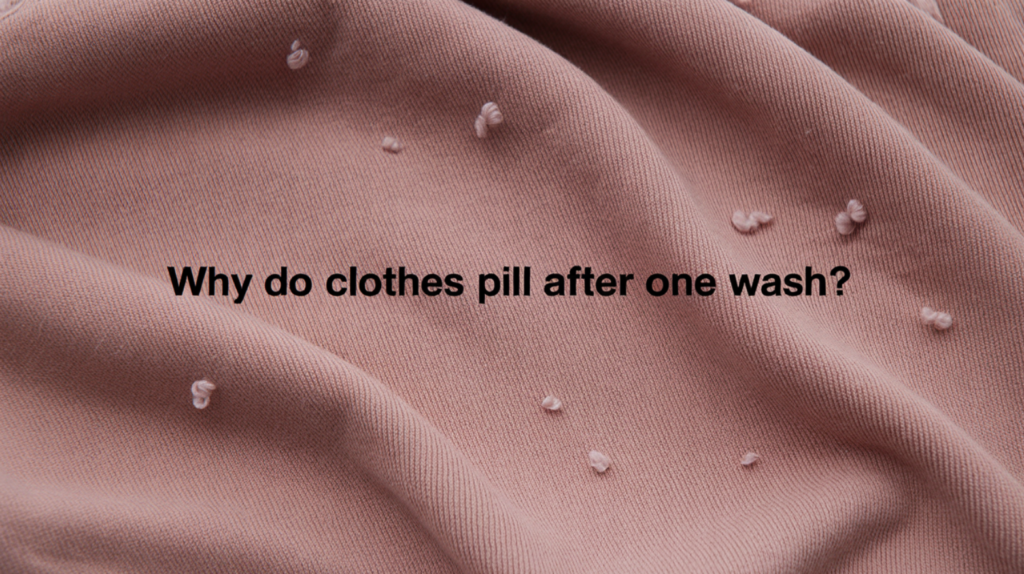
This is common, normal, and not automatically a sign of poor quality.
The quick explanation (plain and honest)
Clothes pill after the first wash because:
- New garments have loose surface fibers
- Washing creates friction and agitation
- Fibers twist together before they can shed naturally
The first wash is often the most aggressive moment in a garment’s life.
New clothes have loose fibers
During manufacturing:
- Fibers are spun into yarn
- Yarn is knitted or woven into fabric
- Some short fibers remain near the surface
These fibers are invisible at first.
The first wash loosens them.
Once they rise to the surface, friction turns them into pills.
This is especially true for:
- Soft fabrics
- Knitwear
- Blended materials
Washing machines increase friction fast
Inside a washing machine:
- Clothes rub against each other
- Fabric twists and stretches
- Fibers catch and tangle
Even a single wash cycle can be enough.
This doesn’t mean the washing machine is “damaging” your clothes, it’s just accelerating a natural process.
Related explanation:
Does the washing machine cause pilling?
First washes are harsher than later ones
The first wash is different because:
- Loose fibers haven’t shed yet
- Fabric is still stiff from manufacturing finishes
- Fibers haven’t settled into their final structure
After this initial shedding phase:
- Pilling often slows down
- New pills form less quickly
So early pilling does not mean ongoing damage.
Fabric type matters more than wash settings
Some fabrics pill faster after one wash because of how they’re built.
More likely to pill early:
- Sweaters
- Knitted fabrics
- Cotton blends
- Polyester blends
Less likely to pill early:
- Tightly woven fabrics
- Long-fiber materials
- Dense, smooth textiles
You can explore fabric behavior here:
Why sweaters pill more than shirts
Detergent and load mixing can contribute
Pilling after one wash is more noticeable when:
- Rough items (jeans, towels) are washed with soft clothes
- Loads are overfilled
- Heavy agitation cycles are used
These don’t create pills on their own, they increase friction, which speeds things up.
Does early pilling mean the clothing is low quality?
No.
Early pilling usually means:
- Fibers are shedding quickly
- Fabric is soft or flexible
- The surface is adjusting to use
Quality issues are more likely if:
- Fabric thins rapidly
- Pills return immediately after removal
- Fibers break instead of shedding
Can you prevent pilling after the first wash?
You can’t stop it completely, but you can reduce it.
Helpful steps:
- Wash clothes inside out
- Use gentler cycles
- Avoid high heat
- Separate rough and delicate fabrics
Bottom line
Clothes pilling after one wash is normal.
It usually happens because loose fibers are exposed to friction for the first time.
In many cases:
- Pilling slows down after early washes
- Fabric stabilizes
- The garment remains wearable and durable