Depilling is the process of removing the small fiber balls that form on the surface of fabric over time. These fiber balls, commonly called pills, develop when loose fibers break free from yarn and tangle together through friction. This process explains why depilling plays a central role in clothing care, fabric maintenance, and garment longevity. At Clothespilling.help, depilling sits at the heart of understanding how to protect clothes from visible wear while preserving their comfort and appearance.
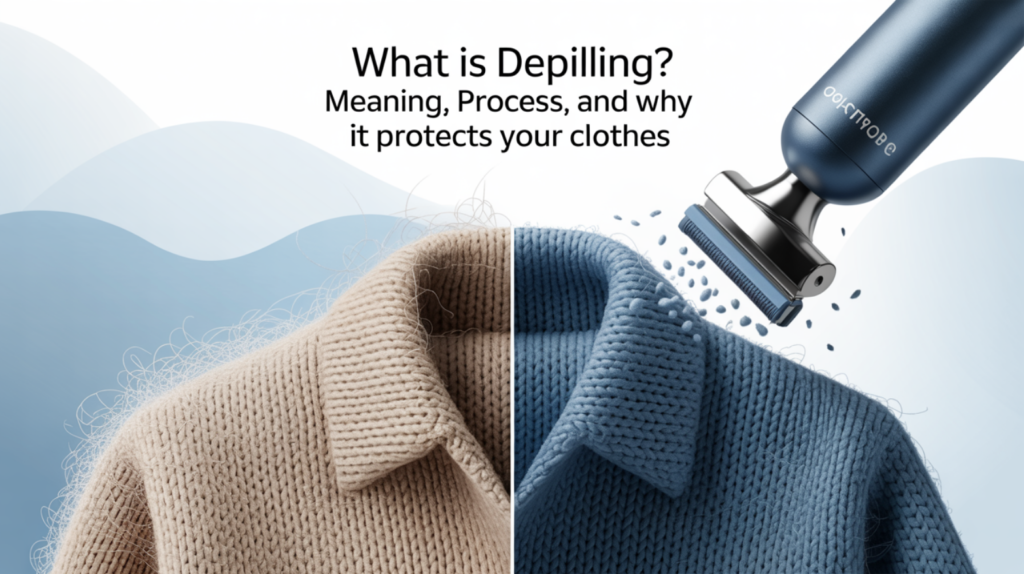
Pilling reduces the smoothness of fabric, but depilling restores that smooth surface. The relationship between these two processes explains why depilling has become a routine part of modern garment care for anyone who wants clothes to last longer and look better.
What Does Depilling Mean in Clothing Care?
Depilling means removing pills from fabric using controlled friction or cutting methods. The fabric surface holds the pills, and depilling removes them without damaging the underlying threads. This removal improves the texture of the garment and restores its original look.
As fabrics age, their fibers loosen and migrate toward the surface. These loose fibers twist together during washing, wearing, and movement. Depilling interrupts this cycle by removing the pills before they accumulate further, which slows the overall aging of the garment.
This connection explains why depilling belongs alongside washing, drying, and storage as one of the core practices of clothing maintenance.
Why Do Clothes Need Depilling?
Clothes develop pills because fibers experience constant stress. Movement, washing, and contact with other fabrics create friction, and friction causes fibers to loosen. Those loose fibers collect and tighten into visible pills.
Depilling removes the surface symptoms of this fiber stress. Once the pills are gone, the fabric feels softer, looks newer, and drapes more smoothly on the body. As a result, depilling extends the usable life of clothing while preserving its visual appeal.
There is also a practical benefit. When pills are left untreated, they trap additional fibers and debris. Removing them early prevents further buildup and makes future care easier.
How the Depilling Process Works
Depilling works by separating the pill from the fabric without pulling or tearing the base threads. The tool used determines how this happens. Fabric shavers trim pills at the surface. Lint removers lift pills away. Manual tools gently scrape them loose. Each method focuses on the same goal: removing excess fiber while protecting the garment’s structure.
This controlled action explains why depilling improves appearance without weakening the clothing when done correctly. The underlying weave remains intact, and the garment maintains its shape and strength.
As a result, depilling becomes a protective process rather than a damaging one.
Is Depilling Safe for Clothes?
Depilling is safe when performed with appropriate tools and light pressure. The key factor is restraint. Gentle removal protects fibers, while aggressive scraping can thin fabric over time.
When depilling is combined with good washing habits and proper storage, it becomes part of a larger system of garment preservation. Together, these habits slow wear, prevent early damage, and maintain clothing quality.
That sense of control can feel reassuring. Instead of watching favorite clothes fade into roughness and fuzz, depilling allows you to actively restore their smoothness and comfort.
When Should You Depill Clothing?
Depilling works best when pills first appear. Early removal prevents pills from spreading and stops additional fibers from collecting around them. This timing keeps garments looking fresh with minimal effort.
Regular inspection after washing and before storage allows you to catch pilling at its earliest stage. This routine transforms depilling from a repair task into simple ongoing care.
Over time, this small habit produces noticeable results. Clothes remain softer, smoother, and more presentable for much longer.
Depilling and Long-Term Fabric Health
Depilling improves appearance, but it also protects the deeper fabric structure. By removing pills early, fibers experience less surface stress, which reduces future breakage. This preservation supports the overall health of the garment.
That improvement becomes visible not just in how clothes look, but in how they feel against the skin. A depilled fabric feels calmer, smoother, and more comfortable, reinforcing the quiet satisfaction of well-maintained clothing.
Conclusion
Depilling is the intentional removal of fabric pills to restore smoothness, protect fibers, and extend the life of clothing. This process works by eliminating surface fiber buildup while preserving the garment’s structure underneath. When used as part of regular care, depilling keeps clothes comfortable, attractive, and durable.
At its core, depilling reflects a simple reality: small acts of care produce lasting results. Through gentle maintenance, your clothes stay softer, stronger, and more enjoyable to wear, long after most garments would have been replaced.