The washing machine does not directly cause pilling, but it can accelerate it.
Pilling happens when loose fibers are exposed to friction. A washing machine increases that friction through movement, agitation, and contact between garments.
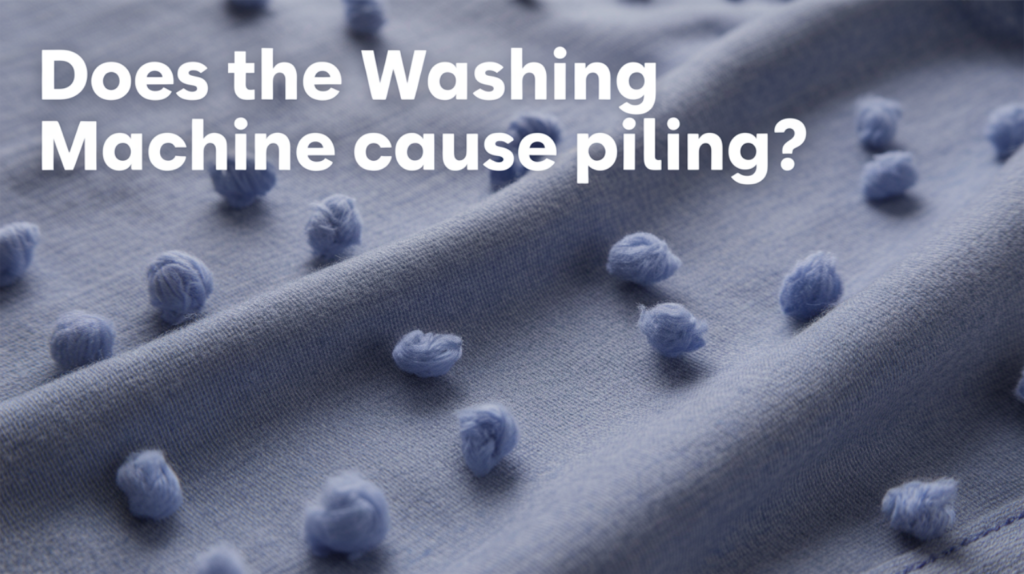
So the machine isn’t “damaging” clothes, it’s speeding up a natural process.
The short answer (clear + accurate)
Washing machines contribute to pilling because they:
- Rub fabrics against each other
- Twist and stretch fibers
- Increase surface friction
If loose fibers are present, pills form more quickly during washing.
Why washing creates the perfect conditions for pilling
Inside a wash cycle, several things happen at once:
- Clothes collide and rotate
- Fibers catch on other fabrics
- Yarn surfaces loosen slightly
- Agitation repeats the process hundreds of times
This repeated motion is ideal for fiber tangling, which leads to pilling.
It’s friction – not water – that matters
Water alone does not cause pilling.
Pilling happens because of:
- Movement
- Contact
- Pressure
That’s why:
- Gentle hand washing causes less pilling
- Rough cycles cause more pilling
- Overfilled machines increase pilling risk
The key factor is how much fabric rubs, not simply being washed.
Why pilling often appears after the first wash
The first wash is especially noticeable because:
- New clothes still have loose surface fibers
- Manufacturing finishes wash away
- Fibers become more flexible and mobile
Once these loose fibers surface, washing makes them tangle quickly.
Which washing habits increase pilling the most?
Pilling is more likely when:
- Washing rough items with soft garments
- Using fast or heavy-duty cycles
- Overloading the machine
- Washing delicate fabrics without protection
These habits don’t create pills from nothing, they intensify friction.
Does detergent affect pilling?
Detergent itself doesn’t cause pilling.
However:
- Strong detergents can strip finishes
- Overuse can weaken surface fibers
- Residue can increase roughness
This makes it easier for fibers to loosen and tangle during washing.
Are some fabrics more affected by washing machines?
Yes. Washing machines affect some fabrics more than others.
More affected:
- Knits
- Sweaters
- Blended fabrics
- Soft cottons and synthetics
Less affected:
- Tightly woven fabrics
- Dense, smooth textiles
- Long-fiber materials
Fabric structure matters more than the machine itself.
Related reading:
Why sweaters pill more than shirts
Can you wash clothes without causing pilling?
You can’t eliminate pilling completely, but you can reduce it significantly.
Helpful habits include:
- Washing clothes inside out
- Using gentle cycles
- Separating rough and delicate items
- Avoiding overloading
So… should you avoid washing machines?
No.
Washing machines are not harmful by default.
They simply reveal and speed up existing fiber behavior.
With the right habits:
- Pilling slows down
- Fabric lasts longer
- Clothes stay wearable
Bottom line
Washing machines don’t cause pilling, friction does.
The machine just increases that friction through movement and contact.
Understanding this helps you:
- Wash smarter
- Reduce future pilling
- Care for clothes more confidently