Yes, friction is one of the main reasons shirts pill. When the fabric keeps rubbing against skin, jackets, desk edges, seatbelts, bags, or even other clothes in the wash, loose fibers on the surface begin to lift. Those fibers then tangle together and form the small bobbles people recognize as pilling.
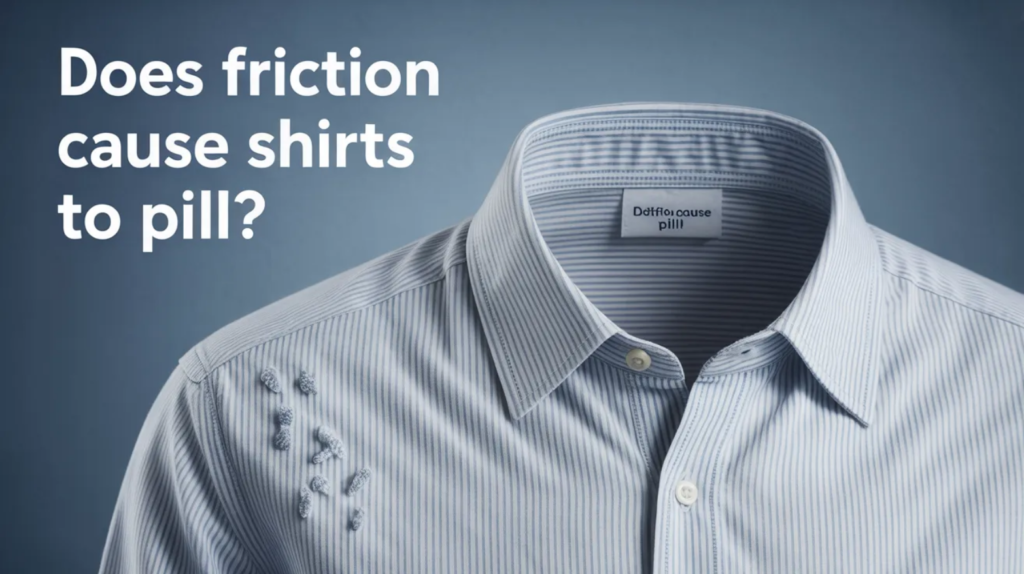
That is why shirt pilling often appears in very specific places rather than across the whole garment at once. The problem usually starts where the shirt gets the most repeated contact. In other words, friction does not just contribute to pilling. It is often the trigger that makes surface wear visible.
If you want the broader overview, this guide on shirt pilling explains the full topic. On this page, the focus is narrower: whether friction itself causes shirts to pill, where that friction comes from, and why some shirts respond to it more badly than others.
How Friction Leads To Shirt Pilling
A shirt does not pill because the fabric suddenly fails all at once. What usually happens is more gradual. Tiny fibers on the surface start to loosen through repeated rubbing. Once those fibers rise, they catch against one another instead of lying flat. After enough contact, they roll into small knots or balls.
So friction is not just “wear and tear” in a vague sense. It is the repeated mechanical action that lifts, twists, and bunches those fibers together. That is the basic reason shirts pill in the first place.
Why Some Parts Of A Shirt Pill Before Others
One of the clearest signs that friction causes pilling is the pattern it leaves behind. Pills usually show up first in high-contact zones rather than randomly. Under the arms, along the sides, across the lower front, and around areas touched by straps or outer layers are all common trouble spots.
A shirt that looks smooth on the back but fuzzy near the waist is often reacting to repeated rubbing in that one area. The same thing happens when a cardigan, blazer, or coat keeps moving across the same part of the shirt all day.
If you have noticed bobbles appearing mostly in movement zones, friction is probably a bigger cause than fabric age alone.
Daily Wear Creates More Friction Than People Realize
Most shirt friction does not come from one dramatic source. It builds through ordinary habits. Leaning against tables, wearing shoulder bags, sitting with a seatbelt across the chest, or moving your arms repeatedly while the fabric rubs under the sleeves can all add up.
This is why a favorite everyday shirt may pill faster than a shirt worn only occasionally. The more often the same fabric goes through the same rubbing pattern, the more chance there is for pills to develop.
That repeated contact can become especially noticeable in soft casual tops, work shirts worn under layers, and stretchy shirts that move constantly with the body.
Underarm Areas Pill Because They Face Constant Movement
Underarm pilling is one of the most common examples of friction-related shirt wear. The fabric in that area bends, rubs, and shifts every time you move your arms. If the shirt is fitted, that pressure can be even stronger because the fabric stays in close contact with the body and itself.
In many cases, underarm bobbling is less about washing and more about repeated movement during wear. That is why it helps to understand why shirts pill under the arms instead of assuming the whole problem began in the laundry.
Outer Layers Can Make Shirt Pilling Worse
A shirt worn on its own may stay relatively smooth, while the same shirt worn under a hoodie, jacket, or coat may start to look fuzzier much faster. That is because outer layers create another surface for the shirt to rub against. Every shift in posture or movement can increase surface stress.
Rougher fabrics are especially important here. If the shirt sits under textured knitwear, heavy outerwear, or garments with coarse inner seams, the rubbing can be more aggressive than it seems.
Even a light layer can contribute if it moves across the same part of the shirt over and over during the day.
Friction In The Wash Counts Too
When people hear “friction”, they often think only about wearing the shirt, but laundry friction matters too. A washing machine creates constant contact between garments as they spin, twist, and knock against each other. That means the shirt is not only rubbing during wear. It may also be rubbing hard during every wash cycle.
If shirts are washed with jeans, towels, or heavier items, the surface fibers can get pulled and roughened more easily. Washing machines can also increase shirt pilling through repeated garment-to-garment friction, especially when the load is mixed badly.
So yes, laundry friction is still friction, and it can absolutely contribute to pilling.
Why Friction Affects Some Shirts More Than Others
Not all shirts react to friction in the same way. Fabric type, knit structure, softness, and fiber length all influence how easily surface fibers loosen. A smoother, tighter fabric may cope with rubbing better, while a softer or fuzzier shirt may show pilling after far less contact.
That is why one shirt can survive months of use with very little visible wear, while another begins to look tired after a short time. The friction may be similar, but the fabric response is different.
Does More Friction Always Mean More Pilling?
Usually, more friction increases the risk, but the relationship is not perfectly simple. A shirt can experience a lot of movement without heavy pilling if the fabric is tightly made and resists fiber lift. On the other hand, a very soft or delicate shirt may pill with much less rubbing.
So friction is best seen as a major cause, not the only cause. It works together with the shirt’s material and construction. Friction creates the opportunity, while the fabric determines how easily pills form and stay attached.
That is one reason why pilling should be understood as both a wear issue and a fabric-behavior issue.
Can Light Friction Cause Pilling Over Time?
Yes, even light friction can cause pilling if it happens often enough. A gentle amount of rubbing repeated every day can eventually create visible bobbles, especially on shirts worn frequently. The effect is cumulative rather than instant.
This explains why shirts sometimes seem fine for weeks and then suddenly look rougher. The fibers have usually been under stress for some time, but the pilling only becomes obvious once enough loose fibers have collected on the surface.
That gradual build-up is also why the problem can seem to “appear out of nowhere” when it has actually been developing slowly.
How To Tell If Friction Is The Main Cause
If you are trying to work out whether friction is behind your shirt pilling, look at the location and pattern. Pills concentrated under the arms, along the sides, near the waist, or where straps sit usually point strongly to rubbing during wear. A more general roughness after laundry may suggest both wear friction and wash friction are involved.
It also helps to confirm that the issue is really pilling rather than lint or simple fuzz. Before changing your care routine, check how to tell if a shirt is pilling so you are treating the right problem.
What Friction Does Not Mean
Friction causing pilling does not automatically mean the shirt is poor quality. It also does not mean you have done something obviously wrong. In many cases, it is simply the result of normal use meeting a fabric that is prone to surface wear.
Still, once friction is identified as the main cause, you can make better decisions. You may wash the shirt more gently, reduce rubbing from bags or rough layers, or choose fabrics that are less likely to pill in the first place.
That is where prevention becomes useful, because reducing friction can help stop shirts from pilling as quickly in the future.
Final Thoughts
Yes, friction does cause shirts to pill, and in many cases it is the biggest reason the problem starts. Repeated rubbing lifts loose fibers, tangles them together, and creates the small bobbles that make a shirt look worn. This can happen during daily wear, under outer layers, around movement zones, and inside the washing machine.
What matters is not just whether friction exists, but how often it happens and how the shirt fabric responds to it. Some shirts cope well with regular rubbing, while others show surface wear much sooner.
If you are building a clearer picture of the problem, it helps to start with why shirts pill, then move into how to prevent shirt pilling if you want to reduce future damage.