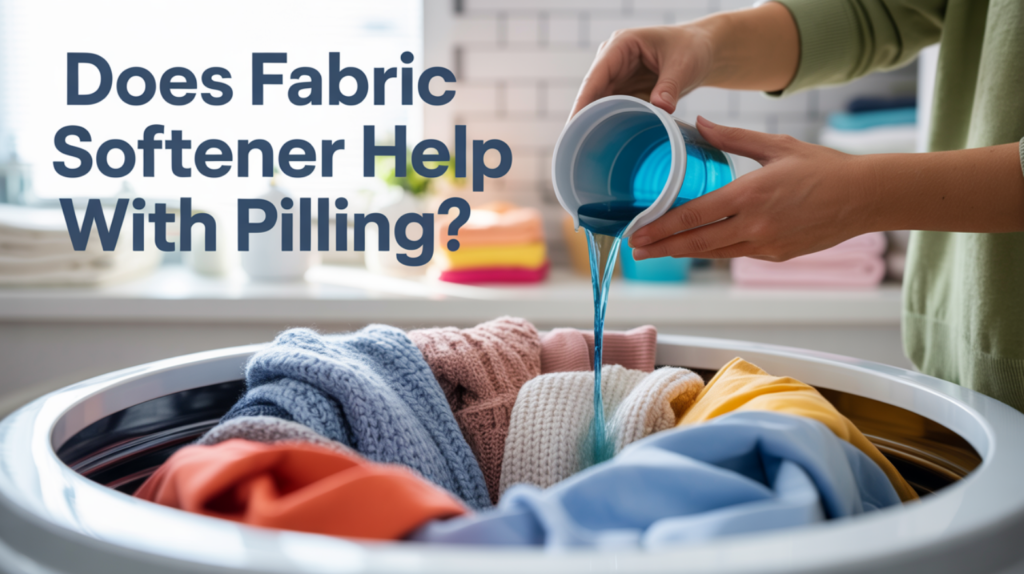
Fabric softener may reduce friction temporarily, but it does not prevent pilling and can sometimes make it worse over time.
This is one of the most common misconceptions in clothing care, so let’s break it down clearly.
What Fabric Softener Actually Does
Fabric softener works by coating fibers with lubricating chemicals.
This coating:
- Makes clothes feel softer
- Reduces static electricity
- Adds scent
- Lowers surface friction temporarily
It does not strengthen fibers or stop them from breaking.
Why Pilling Happens (Quick Context)
Clothes pill when:
- Fibers loosen
- Break due to friction or heat
- Tangle on the surface into small balls
Pilling is a fiber damage issue, not a softness issue.
Can Fabric Softener Reduce Pilling?
Yes, sometimes.
Because fabric softener reduces friction, it can:
- Slightly reduce surface rubbing
- Delay visible pilling for a few washes
But this effect is temporary and cosmetic.
Why Fabric Softener Can Increase Pilling Over Time
Here’s the part most people don’t realize:
Fabric softener:
- Weakens natural fibers over repeated use
- Leaves residue that attracts lint and loose fibers
- Can trap broken fibers on the fabric surface
Over time, this leads to:
- More fuzz
- Faster pill formation
- Duller-looking fabric
This is especially true for:
- Cotton
- Wool blends
- Knitwear
- Athletic synthetics
Does Fabric Softener Cause Pilling?
Many people worry that fabric softener itself may be responsible for the tiny fiber balls that appear after washing. In reality, fabric softener does not directly cause pilling, but the way it alters fabric behavior can influence whether pills form more easily. Softener coats fibers with lubricating agents, making them feel smoother. This reduces friction during wear and washing, which usually lowers the chance of fibers breaking loose.
However, when too much softener is used, the coating can attract lint and loose fibers from other garments. Over time, those loose fibers can tangle and cling to the surface of the fabric, creating the appearance of more pills, especially when combined with rough wash cycles. This effect is amplified when clothes are already vulnerable due to harsh laundering habits (see laundry habits that cause pilling) or when garments are washed with heavy items like towels or denim.
Does Fabric Softener Prevent Pilling on Clothes?
Used correctly, fabric softener can help reduce pilling, particularly on cotton, blends, and synthetic fabrics. By relaxing fibers and reducing static, softener lowers the mechanical stress that causes fibers to snap and surface during washing. Less friction means fewer loose fibers, and fewer loose fibers means fewer pills forming over time.
That said, fabric softener is only part of the solution. Its effect works best when paired with gentle wash methods, such as using cold water, low agitation cycles, and avoiding overcrowding the washer. For long-term prevention, combining softener with proper washing techniques described in how to wash clothes without pilling provides far better protection than relying on softener alone.
How Do Fabric Softener Balls Work – and Can They Reduce Pilling?
Fabric softener balls are designed to release liquid softener gradually throughout the wash cycle. As the washer spins, the ball opens and closes, dispersing softening agents evenly across the load. This controlled release helps prevent over-concentration of softener on any one garment, which can otherwise lead to residue buildup and fiber attraction.
By distributing softener more evenly, these balls help maintain consistent lubrication between garments, reducing friction where pilling usually begins. Their benefit becomes even more noticeable when combined with correct machine loading and cycle selection, topics explained in does the washing machine cause pilling.
Fabric Softener vs. Fiber Health
Think of fabric softener like lotion on cracked skin:
- It feels better immediately
- It doesn’t fix the damage
- Overuse can cause buildup problems
Pilling prevention depends more on fiber integrity, not coating.
When Fabric Softener Is Most Problematic
Avoid fabric softener on:
- Sweaters
- Towels
- Activewear
- Delicate knits
- Clothes that already pill easily
These fabrics rely on natural texture and breathability, which softener interferes with.
Better Alternatives to Fabric Softener
If your goal is less pilling, try these instead:
1. Wash Clothes Inside Out
Reduces surface friction where pills form.
2. Use Gentle Cycles
Lower agitation = fewer broken fibers.
3. Lower Water and Dryer Heat
Heat weakens fibers and increases fuzz.
4. Use White Vinegar (Occasionally)
Helps remove detergent residue without coating fibers.
(No smell remains after drying.)
Does Fabric Softener Ever Make Sense?
Fabric softener may be useful if:
- Static is your main issue
- The garment is already old
- Appearance longevity is not a concern
But it should not be relied on as a pilling solution.
Bottom Line
Fabric softener does not prevent clothes from pilling.
At best, it:
- Delays pilling slightly
- Masks the problem temporarily
At worst, it:
- Weakens fibers
- Increases lint buildup
- Makes pilling worse long-term
True pilling prevention comes from washing, drying, and fabric handling habits, not chemical coatings.
If pilling has already formed, see:
How to remove pilling from clothes at home