Yes, blended fabrics pill, often more than single-fiber fabrics.
Pilling in blended fabrics happens because different fibers behave differently under friction, and the stronger fibers trap the weaker ones.
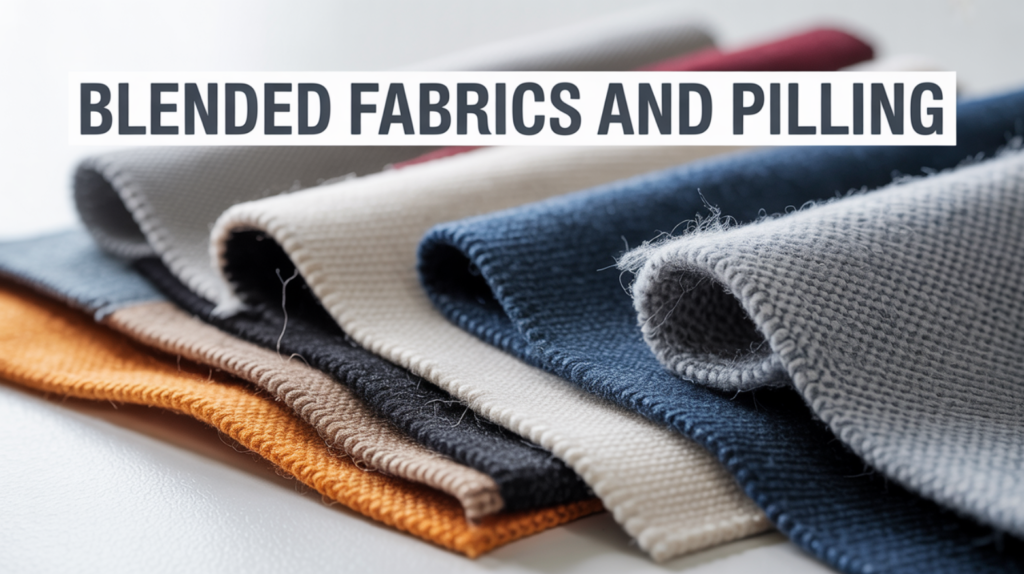
This is one of the most common reasons everyday clothing pills quickly.
The short answer (clear & direct)
Blended fabrics pill more because:
- One fiber sheds easily
- The other fiber holds pills in place
- Friction causes pills to form and stay attached
The result is visible, stubborn pilling.
What are blended fabrics?
Blended fabrics are made from two or more fiber types, such as:
- Cotton + polyester
- Wool + nylon
- Polyester + rayon
These blends are designed for:
- Durability
- Stretch
- Cost reduction
- Easy care
But blending fibers also increases pilling risk.
Why blends pill more than single-fiber fabrics
Each fiber in a blend behaves differently.
In most blends:
- One fiber is weaker (sheds fibers easily)
- One fiber is stronger (holds onto pills)
For example:
- Cotton fibers break loose
- Polyester fibers trap them
- Pills form and stay attached
This makes blends pill faster and longer.
Related fabric behavior:
Common blends that pill heavily
Some blends are especially prone to pilling:
- Cotton–polyester (t-shirts, hoodies)
- Wool–nylon (sweaters, knitwear)
- Polyester–rayon (soft tops, dresses)
These fabrics often feel soft and comfortable, but softness usually means looser surface fibers.
Does blend quality reduce pilling?
Quality helps, but it doesn’t eliminate pilling.
Higher-quality blends may:
- Pill more slowly
- Form smaller pills
- Look better longer
But even premium blends will pill under friction.
Fabric construction matters more than brand.
How washing affects blended fabrics
Washing is one of the biggest triggers for pilling.
Blended fabrics pill faster when:
- Washed with rough items (jeans, towels)
- Washed in hot water
- Overloaded washing machines
- High agitation cycles are used
Agitation loosens weak fibers, which then tangle and form pills.
Related guide:
Does the washing machine cause pilling?
Do dryers make blended fabrics pill more?
Yes — dryers significantly increase pilling in blends.
Heat and tumbling:
- Increase fiber friction
- Pull fibers to the surface
- Lock pills in place
Air drying or low-heat drying helps reduce surface damage.
Can pilling be removed from blended fabrics?
Yes, but care matters.
Blended fabrics:
- Can be safely de-pilled
- Should be treated gently
- Can thin if over-shaved
Best methods:
- Fabric shavers (light pressure)
- Manual fabric combs
- Spot testing first
Removal guide:
How to remove pilling from clothes
How to reduce pilling in blended fabrics
You can’t fully prevent pilling — but you can reduce it.
Best practices:
- Wash inside out
- Use cold water
- Separate rough fabrics
- Avoid over-drying
- Choose tighter knits when buying
Care habits matter more for blends than for single-fiber fabrics.
Bottom line
Blended fabrics pill because fibers wear unevenly.
The stronger fibers hold pills formed from weaker ones.
With careful washing and gentle removal, blended garments can still look good — but they will always be more pilling-prone than pure fabrics.