Yes. Friction is the primary cause of clothes pilling.
Pilling happens when loose fibers on fabric rub against something repeatedly and tangle together on the surface.
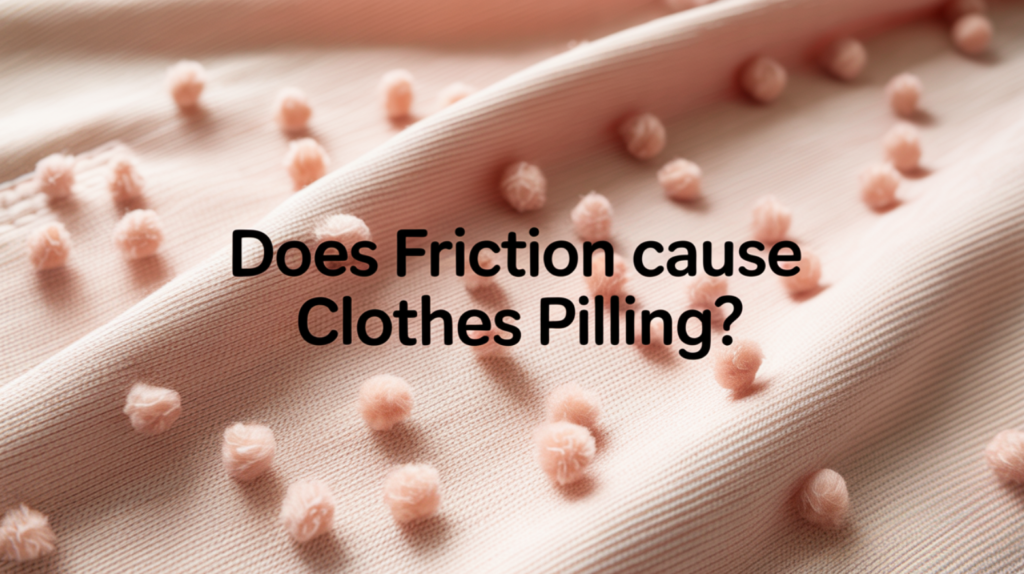
Without friction, pills would not form.
The short answer
Clothes pill because:
- Fibers rub against other fibers
- Loose ends twist together
- Small balls form on the surface
This rubbing, also called friction, is what starts and grows pills.
What friction means in everyday wear
Friction doesn’t just happen in washing machines.
It happens during normal use, such as:
- Walking (inner thighs rubbing)
- Arm movement (underarms and sleeves)
- Sitting on chairs or couches
- Carrying bags or wearing seat belts
Anywhere fabric rubs repeatedly, pilling is more likely.
Why friction affects some areas more than others
Pilling usually appears first in high-contact zones, including:
- Underarms
- Sides of sweaters
- Elbows
- Waist and hip areas
- Areas under backpack straps
These spots experience constant rubbing, which pulls fibers loose faster.
This is normal and predictable.
How friction turns fibers into pills
The process looks like this:
- Friction loosens tiny fibers
- Fibers rise to the fabric surface
- Continued rubbing twists them together
- Pills grow as more fibers join
Once a pill forms, friction keeps feeding it.
This is why pills often get larger before they fall off or are removed.
Washing machines increase friction quickly
Washing machines don’t create pilling on their own, they intensify friction.
During a wash cycle:
- Clothes rub against each other
- Fabrics twist and stretch
- Fibers collide hundreds of times
If loose fibers exist, friction during washing speeds up pilling.
Why soft fabrics pill more easily
Soft fabrics often pill more because:
- Fibers move more freely
- Yarn is less tightly twisted
- Surfaces are fuzzier
These fabrics feel comfortable, but friction affects them faster.
This explains why:
- Sweaters pill more than shirts
- Knits pill more than woven fabrics
Related guide:
Why sweaters pill more than shirts
Does heat make friction worse?
Yes — indirectly.
Heat:
- Weakens fibers
- Makes surfaces rougher
- Increases fiber breakage
When heat and friction combine (like tumble drying), pilling accelerates.
Can you reduce friction to prevent pilling?
You can’t remove friction completely, but you can reduce it.
Helpful steps include:
- Washing clothes inside out
- Separating rough and delicate fabrics
- Using gentler wash cycles
- Avoiding over-drying
Prevention guide:
How to prevent clothes pilling
Is friction damage permanent?
No.
Most pills:
- Sit on the surface
- Don’t damage the core fabric
- Can be removed safely
The key is removing them without adding more friction.
Removal guide:
How to remove clothes pilling safely
Bottom line
Yes, friction causes clothes pilling.
It pulls loose fibers to the surface and tangles them into visible pills.
Understanding friction helps you:
- Predict where pilling will appear
- Reduce it through better habits
- Care for clothes with confidence