Clothes pilling is caused by friction acting on loose or broken fibers in fabric.
When garments rub against each other, your body, or hard surfaces, tiny fibers loosen, tangle, and form small balls on the surface of the fabric.
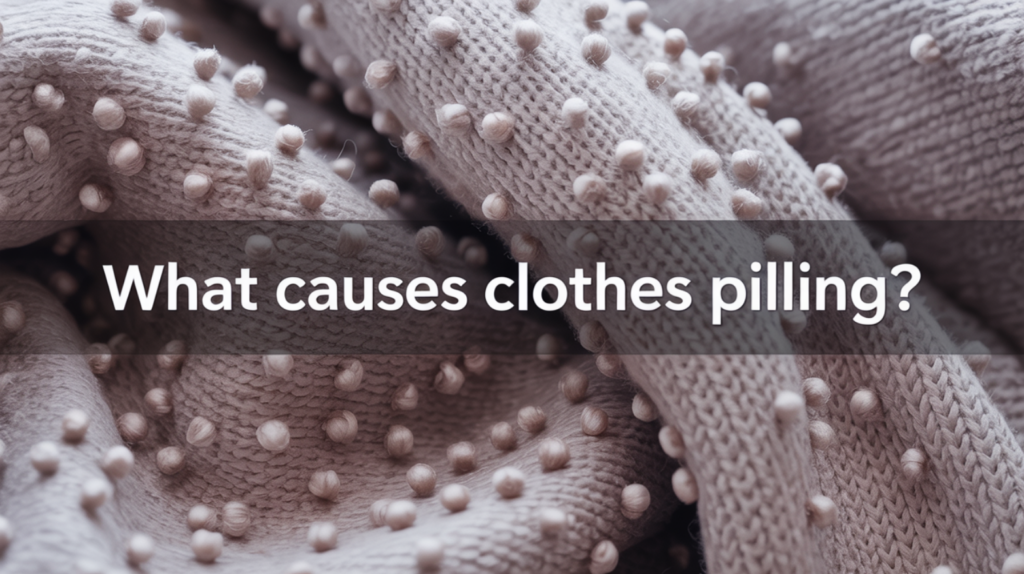
This process is common, normal, and mostly related to how fabric is made and used, not just quality.
The short version (clear + honest)
Clothes pill because of:
- Friction (movement, washing, wearing)
- Loose fibers in the yarn
- Fabric structure (knits pill more than woven fabrics)
- Heat and agitation during washing and drying
Each factor plays a role. Together, they speed up pilling.
1. Friction is the main trigger
Friction is the #1 cause of clothes pilling.
It happens when fabric rubs against:
- Other clothes in the wash
- Your skin (underarms, thighs, shoulders)
- Furniture, bags, or seat belts
- The inside of a washing machine or dryer
The more rubbing a garment experiences, the more likely pills will form.
👉 This is why pilling often appears in high-contact areas first.
2. Loose fibers are already there
Pilling doesn’t start from nothing.
Many fabrics contain short or loose fibers left over from manufacturing.
When friction pulls these fibers to the surface, they twist together and form pills.
Key point:
- Short fibers pill more easily than long fibers
- This applies to both natural and synthetic fabrics
This is why two shirts can look identical but pill very differently.
3. Fabric type matters more than price
Expensive clothes can pill. Cheap clothes can pill.
Fabric construction matters more than cost.
Common examples:
- Sweaters pill more than shirts
- Knitted fabrics pill more than tightly woven ones
- Blended fabrics pill more than single-fiber fabrics
That doesn’t mean the garment is bad — it means the fibers move more freely.
4. Washing machines increase friction
Washing machines don’t “cause” pilling, but they accelerate it.
Inside a wash cycle:
- Clothes twist together
- Fibers rub repeatedly
- Agitation loosens surface fibers
Fast cycles, heavy loads, and rough mixing increase the effect.
This is especially noticeable after the first few washes.
Related guide:
Does the washing machine cause pilling?
5. Heat makes it worse
Heat weakens fibers and increases surface friction.
This happens when:
- Using hot water
- Over-drying clothes
- Tumble drying delicate fabrics
Heat doesn’t create pills directly, but it makes fibers easier to break and tangle.
Small changes here can significantly reduce pilling over time.
6. Blended fabrics pill more often
Blends (like cotton-polyester) pill more because:
- One fiber breaks
- The other fiber holds the pill in place
Synthetic fibers are strong, so once a pill forms, it stays attached instead of falling off.
Is pilling a sign of low quality?
Not necessarily.
Pilling is a wear pattern, not a defect.
Some high-quality garments pill early and then stabilize.
Others pill slowly over time.
The real indicators are:
- How quickly pills form
- Whether they keep returning after removal
What causes pilling the fastest?
The most common accelerators are:
- High friction areas
- Frequent washing
- Dryer heat
- Mixed loads (rough + delicate fabrics together)
If multiple factors are present, pilling appears sooner.
What to read next
If you want to go deeper:
Tiny reassurance
Pilling is common, even on well-made clothes.
With the right habits, it can usually be reduced and managed, not just tolerated.