Clothes pill more when laundry habits increase friction, heat, and fiber stress.
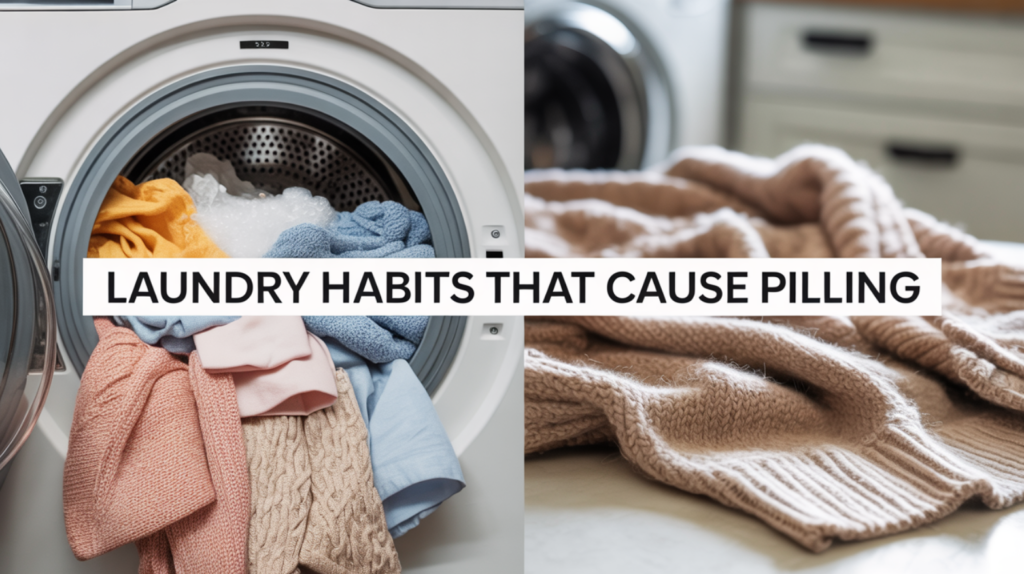
Most pilling damage doesn’t come from wearing clothes, it happens in the washing and drying process. Small, repeated habits slowly break fibers and turn them into fuzz and pills.
Why Laundry Habits Matter More Than Fabric Quality
Pilling forms when loose fibers:
- Break free from the yarn
- Tangle together
- Get rolled into small balls by movement
Laundry machines create the perfect environment for this:
- Constant motion
- Fabric-to-fabric rubbing
- Heat and moisture
Even high-quality clothing can pill quickly if washed the wrong way.
Laundry Habits That Increase Pilling
1. Washing Everything Together
Mixing fabrics causes uneven friction.
For example:
- Denim rubbing against knits
- Towels rubbing against sweaters
- Zippers scraping soft fabric
This pulls fibers loose and speeds up pilling.
Fix: wash similar fabrics together, soft with soft, heavy with heavy.
2. Using Aggressive Wash Cycles
Fast spins and long agitation:
- Twist fibers
- Stretch yarns
- Increase surface fuzz
“Normal” or “heavy duty” cycles are often too harsh for knitwear.
Fix: use gentle or delicate cycles for clothes that pill easily.
3. Overloading the Washing Machine
An overloaded washer:
- Forces clothes to rub tightly together
- Prevents proper water flow
- Increases friction instead of cleaning
More friction = more fiber breakage.
Fix: leave enough space for clothes to move freely.
4. Washing Clothes Inside-Out (But Not Always)
Turning clothes inside-out helps surface protection, but it can backfire when:
- Multiple inside-out garments rub heavily
- Inner seams grind against each other
This often shifts pilling to interior fabric zones.
Fix: use inside-out washing selectively, especially for sweaters and smooth knits.
5. Using Too Much Detergent
Excess detergent:
- Leaves residue
- Stiffens fibers
- Increases friction during rinsing
Stiff fibers break more easily.
Fix: use the minimum effective amount of detergent.
6. High Heat Drying
Heat weakens fibers and increases surface roughness.
Tumble drying also:
- Rolls loose fibers into pills
- Locks fuzz into place
This is one of the fastest ways to cause pilling.
Fix: air-dry when possible or use low heat.
7. Drying Clothes Too Long
Over-drying:
- Dries fibers past their natural flexibility
- Makes them brittle
- Increases breakage with movement
Many pills form in the last 10–15 minutes of drying.
Fix: remove clothes while slightly damp and air-finish.
Habits That Reduce Pilling (Quick Contrast)
- Wash similar fabrics together
- Use gentle cycles
- Don’t overload machines
- Use low heat or air-dry
- Avoid excess detergent
If Pilling Has Already Started
Changing laundry habits won’t remove existing pills, but it prevents new ones.
For safe removal methods, see:
Removing pilling from clothes
Bottom Line
Laundry habits are the biggest hidden cause of clothes pilling.
Friction, heat, and overload slowly damage fibers long before pills become visible.
Small changes, gentler cycles, lighter loads, and lower heat, make a noticeable difference over time.