Fabrics pill the most when they have short, loose fibers and experience frequent friction.
This means some common, everyday fabrics are far more prone to pilling than others.
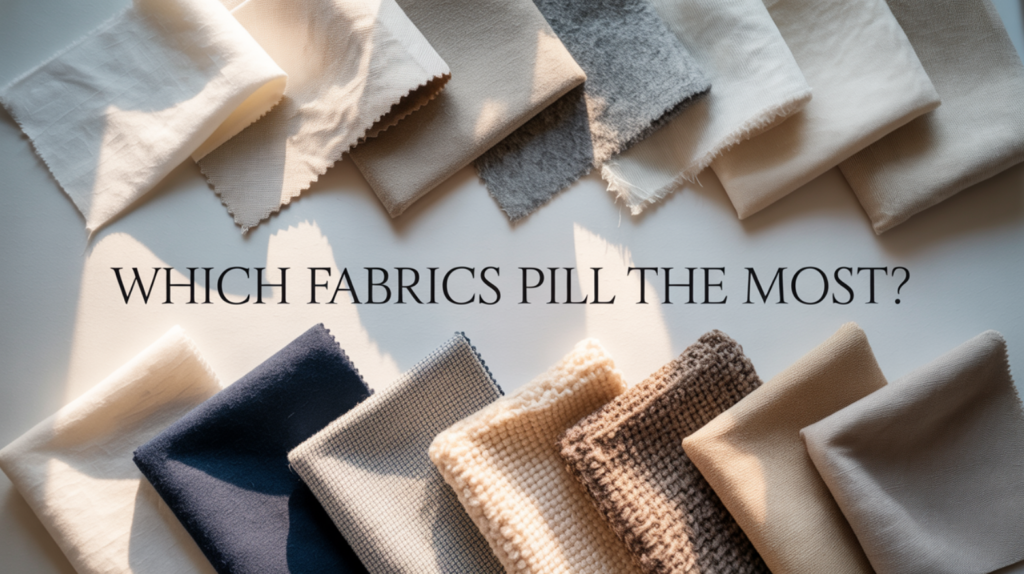
Understanding which fabrics pill the most helps you set realistic expectations, and choose better care methods.
The short answer (clear & direct)
The fabrics that pill the most are:
- Polyester and polyester blends
- Wool (especially soft knits)
- Acrylic
- Cotton blends
- Rayon blends
These fabrics shed fibers easily or trap loose fibers on the surface.
Why some fabrics pill more than others
Pilling happens when loose fibers break free and tangle together.
Fabrics pill more when they:
- Have short fibers
- Are loosely woven or knitted
- Contain synthetic fibers that trap pills
- Experience high friction
Fabric type matters more than price.
Polyester (and polyester blends)
Polyester is one of the most pill-prone fabrics.
Why:
- Polyester fibers are strong
- They don’t break off easily
- They hold onto pills formed by other fibers
This makes pills more visible and longer-lasting.
Related:
Wool (especially soft wool)
Wool pills easily — especially new or soft garments.
Why:
- Wool fibers are naturally short
- Surface fibers loosen with wear
- Knitted wool creates friction
Soft merino and cashmere blends pill more than tightly spun wool.
Related:
Acrylic
Acrylic is one of the worst offenders for pilling.
Why:
- Fibers are short and synthetic
- Pills form quickly
- Pills stay attached
Acrylic sweaters often pill after only a few wears.
Cotton blends (cotton + polyester)
Pure cotton pills less than blends.
But cotton blends pill more because:
- Cotton fibers break loose
- Polyester fibers trap pills
This combination creates frequent and stubborn pilling.
Related:
Rayon and viscose blends
Rayon fibers are weak when wet.
This leads to:
- Fiber breakage during washing
- Surface fuzz
- Faster pilling in blends
Rayon blends feel soft but require gentle care.
Fabrics that pill the least
For comparison, fabrics that pill less include:
- Linen
- Silk
- Denim
- Tightly woven cotton
These fabrics have longer fibers or tighter construction.
Does fabric quality change pilling?
Quality helps, but it doesn’t eliminate pilling.
Higher-quality fabric may:
- Pill more slowly
- Form smaller pills
- Look better longer
But fiber type still matters most.
Can pilling be reduced?
Yes, regardless of fabric.
You can reduce pilling by:
- Washing inside out
- Using gentle cycles
- Avoiding high heat
- Separating rough fabrics
Care habits matter as much as fabric choice.
Related:
How to prevent clothes from pilling
Bottom line
Polyester, wool, acrylic, and blended fabrics pill the most.
Short fibers and synthetic blends increase both pill formation and visibility.
Knowing which fabrics pill most helps you care for them properly — and avoid unnecessary damage.