Yes, wool pills, even high-quality wool.
Wool pilling happens when loose wool fibers rise to the surface and twist together due to friction from wear, washing, or movement.
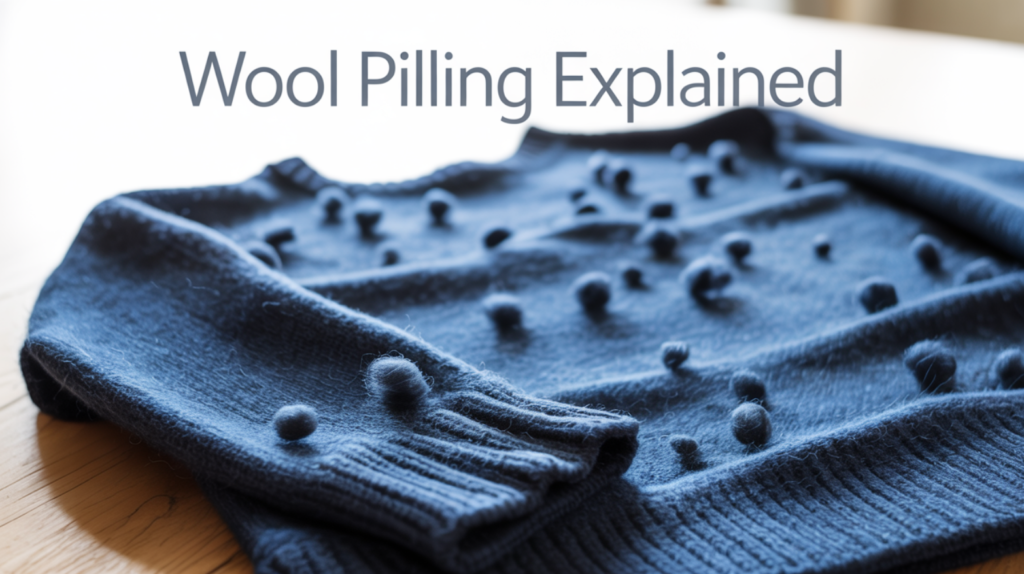
It’s common, expected, and not a sign of poor wool.
The short answer (clear & direct)
Wool pills because:
- Wool fibers naturally have scales
- Loose fibers migrate to the fabric surface
- Friction causes those fibers to tangle into small balls
The softer the wool, the more likely it is to pill.
Why wool pills so easily
Wool fibers are crimped and elastic.
That elasticity makes wool warm and comfortable, but it also increases movement between fibers.
When wool is:
- Softly spun
- Lightly knitted
- Worn in high-friction areas
…the fibers loosen and twist together, forming pills.
This is why sweaters pill more than structured wool coats.
Related explanation:
Why sweaters pill more than shirts
Does wool quality affect pilling?
Yes, but not in the way most people expect.
Higher-quality wool:
- Uses finer fibers
- Feels softer against the skin
- Pills more easily at first
Lower-quality wool:
- Uses coarser fibers
- Feels rougher
- Pills less, but feels less comfortable
So early pilling can actually indicate fine wool, not bad wool.
Types of wool and pilling behavior
Not all wool pills the same way.
Wool that pills more:
- Merino wool
- Cashmere
- Lambswool
- Soft knit wool
Wool that pills less:
- Tightly woven wool
- Boiled wool
- Felted wool
- Wool blends with stronger structure
Cashmere pills the most early on, then stabilizes after surface fibers are removed.
Does washing cause wool pilling?
Washing doesn’t create pills, friction does.
Wool pills faster when washed with:
- Hot water
- Strong agitation
- Regular detergent
- Mixed fabrics
Improper washing loosens fibers and speeds up surface fuzz.
Proper care is critical for wool longevity.
Related guide:
How to wash clothes without pilling
What about dryers and wool?
Dryers are especially damaging to wool.
Heat and tumbling:
- Break wool fibers
- Increase surface friction
- Shrink and weaken fabric
Most wool garments should:
- Be air-dried flat
- Kept away from direct heat
This alone reduces most wool pilling.
Can wool pilling be removed safely?
Yes, when done gently.
Wool pills:
- Sit on the surface
- Don’t weaken the fabric when removed correctly
- Often reduce after initial wear
Gentle removal methods are essential.
Safe methods:
- Fabric combs
- Light-pressure fabric shavers
- Manual removal for delicate knits
How to reduce wool pilling
Small habits make a big difference.
Best practices:
- Wash wool inside out
- Use cold water
- Choose wool-safe detergent
- Avoid hanging wet wool
- Store folded, not hung
Storage also matters long-term.
Related guide:
How to store sweaters to prevent pilling
Wool vs other fabrics
Compared to other fabrics:
- Wool pills more than tightly woven cotton
- Wool pills less than many polyester blends
- Wool pills early, then stabilizes
This early pilling phase is normal and temporary.
Related reading:
Bottom line
Wool pilling is normal, especially in soft, fine wool.
It happens because wool fibers are elastic, scaled, and naturally mobile.
With proper washing, drying, and gentle care, wool garments stay smooth and wearable for years.